Article: How to Stack Bracelets: A Guide to Effortless Layering
How to Stack Bracelets: A Guide to Effortless Layering
A thoughtfully layered bracelet stack can add texture, colour and individuality to even the simplest outfit. The most effortless combinations are not necessarily the largest—they are built through balance, proportion and one clear visual connection.
You might repeat a metal tone, combine pearls with a fine chain or use one natural gemstone as the focal point. This guide explains how to stack bracelets in a way that feels refined, comfortable and personal.
What Is Bracelet Stacking?
Bracelet stacking means wearing two or more bracelets together on the same wrist. The pieces may match closely or differ in material, width, texture and colour.
A successful stack usually includes both connection and contrast. If every bracelet is identical, the combination may feel flat. If every piece is completely different, it can appear visually crowded.
The aim is to create a group that feels collected with intention.
Begin With One Focal Bracelet
Choose the bracelet you most want to feature before adding other pieces.
Your focal piece might include:
-
Freshwater pearls
-
Tiger eye or another natural gemstone
-
A sculptural silver detail
-
An unusual texture
-
A distinctive chain
-
A meaningful charm or motif
Build the remaining stack around this piece. Supporting bracelets should add depth without hiding its most interesting details.
If the focal bracelet is colourful or highly textured, pair it with simpler metal pieces. If it is delicate, use one contrasting texture to give the arrangement more presence.
How Many Bracelets Should You Stack?
There is no fixed number, but two or three bracelets offer an easy starting point.
Two Bracelets
A two-piece stack feels clean and minimal. Combine:
-
One chain bracelet with one pearl bracelet
-
One gemstone bracelet with one fine metal piece
-
Two bracelets of different widths in the same metal tone
Three Bracelets
Three pieces allow more variation while remaining manageable. Try using:
-
One focal bracelet
-
One simple connecting piece
-
One contrasting texture
Four or More Bracelets
A larger stack creates a stronger statement. Keep the combination controlled by repeating a colour, metal or design detail.
Leave some space for movement and make sure the bracelets do not feel heavy, restrictive or distracting during daily activities.
Mix Different Textures
Texture is one of the easiest ways to make a bracelet stack feel layered rather than repetitive.
A smooth chain can balance the organic surface of freshwater pearls. A fine bracelet can soften a wider sculptural design. Polished metal can add light between natural gemstone beads.
Useful combinations include:
-
Fine chain and freshwater pearls
-
Smooth metal and faceted gemstones
-
Structured links and organic pearl shapes
-
One wider bracelet with one or two delicate pieces
-
Polished silver with subtle textured metal
Avoid choosing several highly detailed bracelets of the same size. Without contrast, individual designs can disappear into the group.
How to Mix Silver and Gold Bracelets
Silver- and gold-toned bracelets can be worn together when the contrast looks intentional.
Repeat each metal tone rather than adding one isolated piece. For example, combine two gold-toned bracelets with one silver piece and repeat silver elsewhere through a ring, necklace or earrings.
A mixed-metal bracelet can also act as a visual bridge.
For a quieter look, select pieces with similar widths and simple shapes. For a stronger statement, vary the scale while keeping the rest of your jewelry restrained.
Add Pearls and Gemstones
Pearls and natural gemstones introduce colour and organic variation to a bracelet stack.
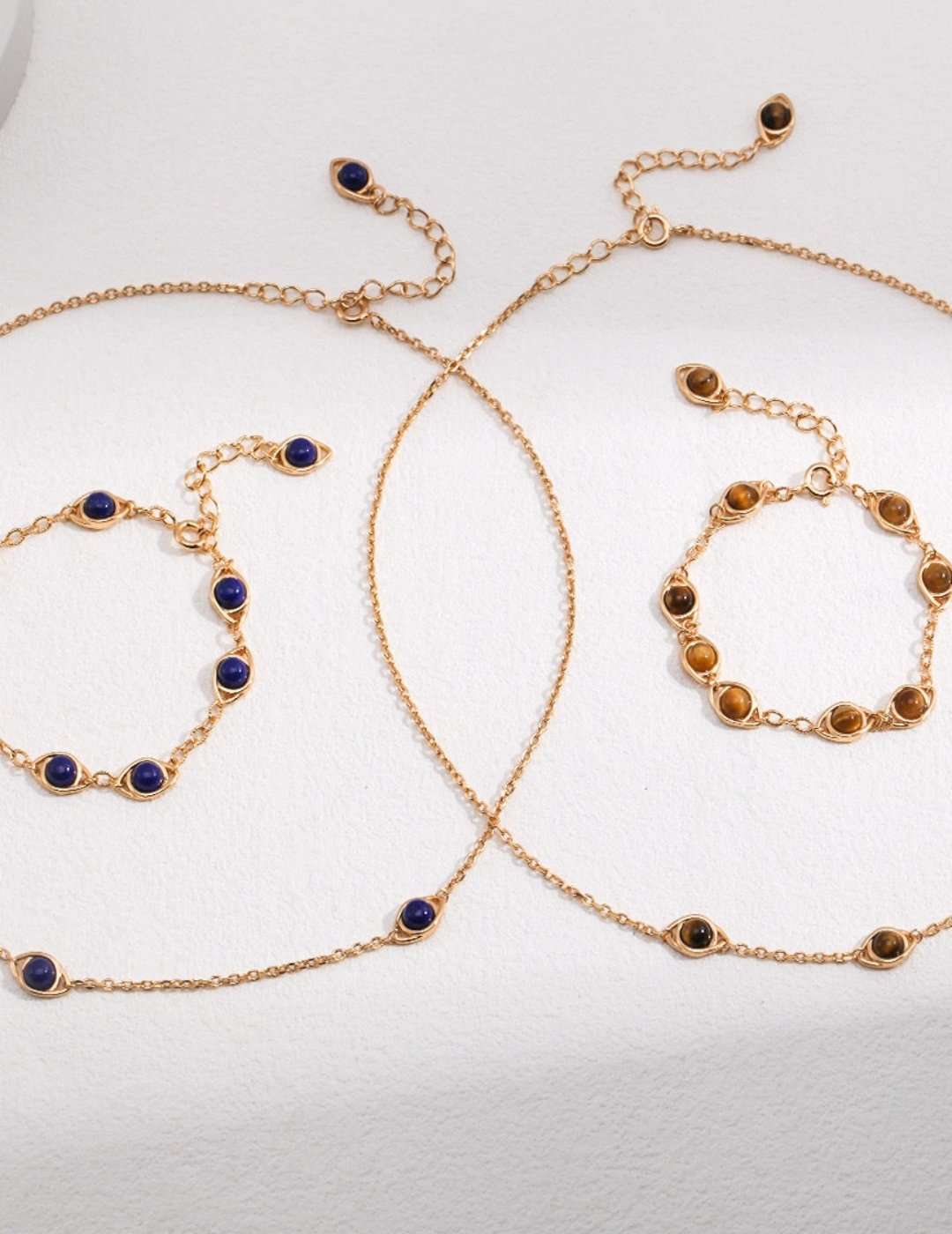
Freshwater pearls create soft luminosity and pair naturally with both silver- and gold-toned pieces. Tiger eye adds warm brown and golden movement, while lapis lazuli introduces a rich blue accent.
When using coloured stones:
-
Choose one main gemstone colour.
-
Repeat its metal tone in another bracelet.
-
Keep surrounding pieces relatively simple.
-
Coordinate the colour with your clothing or other jewelry.
-
Avoid adding several unrelated gemstone colours at once.
Natural stones and pearls may vary slightly in shape, colour and pattern. These differences can give a layered combination more individual character.
Coordinate Without Matching Perfectly
Your bracelets do not need to come from the same set.
Instead, create connection through one shared element:
-
The same metal finish
-
A repeated pearl detail
-
A similar chain shape
-
One gemstone colour
-
A consistent level of delicacy
-
A repeated organic or geometric form
This creates cohesion while allowing every piece to remain distinct.
Balance Bracelet Width and Scale
Contrast in width helps each bracelet remain visible.
If you prefer minimalist jewelry, begin with two slim bracelets in the same metal tone, then add a pearl or gemstone piece as a subtle focal point.
If your focal piece is wide or formed from larger beads, add one or two finer bracelets. If every piece is delicate, include a slightly more structured chain or textured detail to anchor the stack.
Place the most substantial bracelet where it feels comfortable and does not press against the wrist bone. Arrange finer pieces around it and check how they move when you lift or turn your hand.
A stack should look balanced both while your arm is still and during natural movement.
How to Stack Bracelets With a Watch
A watch can become part of the arrangement rather than sitting separately.
For a refined look, add one delicate bracelet beside the watch. A second bracelet can be included if there is enough space and the combination remains comfortable.
Consider:
-
Matching or coordinating the metal tones
-
Using a bracelet narrower than the watch strap
-
Adding pearls or a subtle gemstone for contrast
-
Avoiding pieces that repeatedly strike the watch face
-
Keeping delicate surfaces away from sharp watch edges
If contact may cause scratching, wear the bracelets on the opposite wrist instead.
Should You Stack Both Wrists?
Wearing the main stack on one wrist usually creates the clearest focal point.
The other wrist may remain bare or hold one simple piece, such as a watch or fine bracelet. This asymmetry often feels more modern and balanced than placing equally large stacks on both sides.
For a bolder look, both wrists may be styled, but vary the scale. Use the fuller stack on one side and a quieter arrangement on the other.
Match the Stack to the Occasion
Everyday Wear
Choose two or three comfortable pieces with smooth surfaces and secure clasps. A chain, pearl bracelet and simple gemstone accent can add detail without becoming impractical.
Work
Keep the stack refined and relatively quiet. Avoid pieces that make excessive noise or interfere with typing and other tasks.
Dinner or Date Night
Add a more distinctive gemstone, sculptural form or polished metal finish. Allow the bracelet stack to become the main accessory while keeping other jewelry balanced.
Weddings and Events
Coordinate the bracelets with the outfit’s neckline, earrings and other details. Pearls and refined gemstones can provide colour and luminosity without overwhelming the complete look.
Measure Your Wrist Before Buying
A bracelet that is too tight will feel uncomfortable, while one that is too loose may slide excessively or catch on objects.
To measure your wrist:
-
Wrap a soft measuring tape around the wrist where you normally wear a bracelet.
-
Keep the tape close to the skin without pulling it tightly.
-
Record the measurement.
-
Compare it with the bracelet length and available extension chain.
-
Consider how fitted or relaxed you prefer the bracelet to feel.
If using string, mark the meeting point and measure it flat with a ruler.
Also check whether the product measurement includes the clasp and extension chain.
Protect Your Jewelry While Layering
Bracelets naturally touch one another when stacked, so some contact is unavoidable. However, careful combinations can reduce unnecessary scratching and wear.
Avoid placing very hard or sharp-edged pieces directly beside pearls, mother of pearl, plated surfaces or softer gemstones.
After wearing:
-
Separate the bracelets before storage.
-
Wipe each piece gently with a soft cloth.
-
Check clasps and delicate settings.
-
Keep jewelry away from perfume, lotion and harsh chemicals.
-
Remove the stack before swimming, showering, exercising or sleeping.
Store pieces individually rather than leaving them tangled together.
Common Bracelet-Stacking Mistakes
Wearing Too Many Focal Pieces
If every bracelet is bold, none becomes the clear centre of the arrangement. Keep one main piece and allow the others to support it.
Ignoring Comfort
A beautiful stack will remain unworn if it feels heavy, tight or distracting. Test how it moves during normal activities.
Using Too Many Unrelated Colours
Several gemstone colours can compete visually. Choose one main colour family and use metal or pearls to create balance.
Forgetting Proportion
Bracelets that are all the same width may merge together. Vary the scale so each design remains visible.
Storing the Stack Together
Separating the pieces after wear reduces tangling, scratching and friction between different materials.
Create a Stack That Feels Personal
Bracelet stacking is not about following one perfect formula. It is a way to combine pieces that reflect your style, wardrobe and daily life.
Begin with one focal bracelet, add contrast through texture and repeat one shared detail to create cohesion. Two carefully selected pieces may feel just as complete as a larger stack.
Whether you prefer freshwater pearls, warm tiger eye, deep-blue lapis lazuli or refined sterling silver, choose a combination that feels comfortable and unmistakably yours.
Explore Janique Jewelry’s bracelet collection and discover pieces designed to be worn alone, layered together and styled your way.

Written by Janique Jewelry