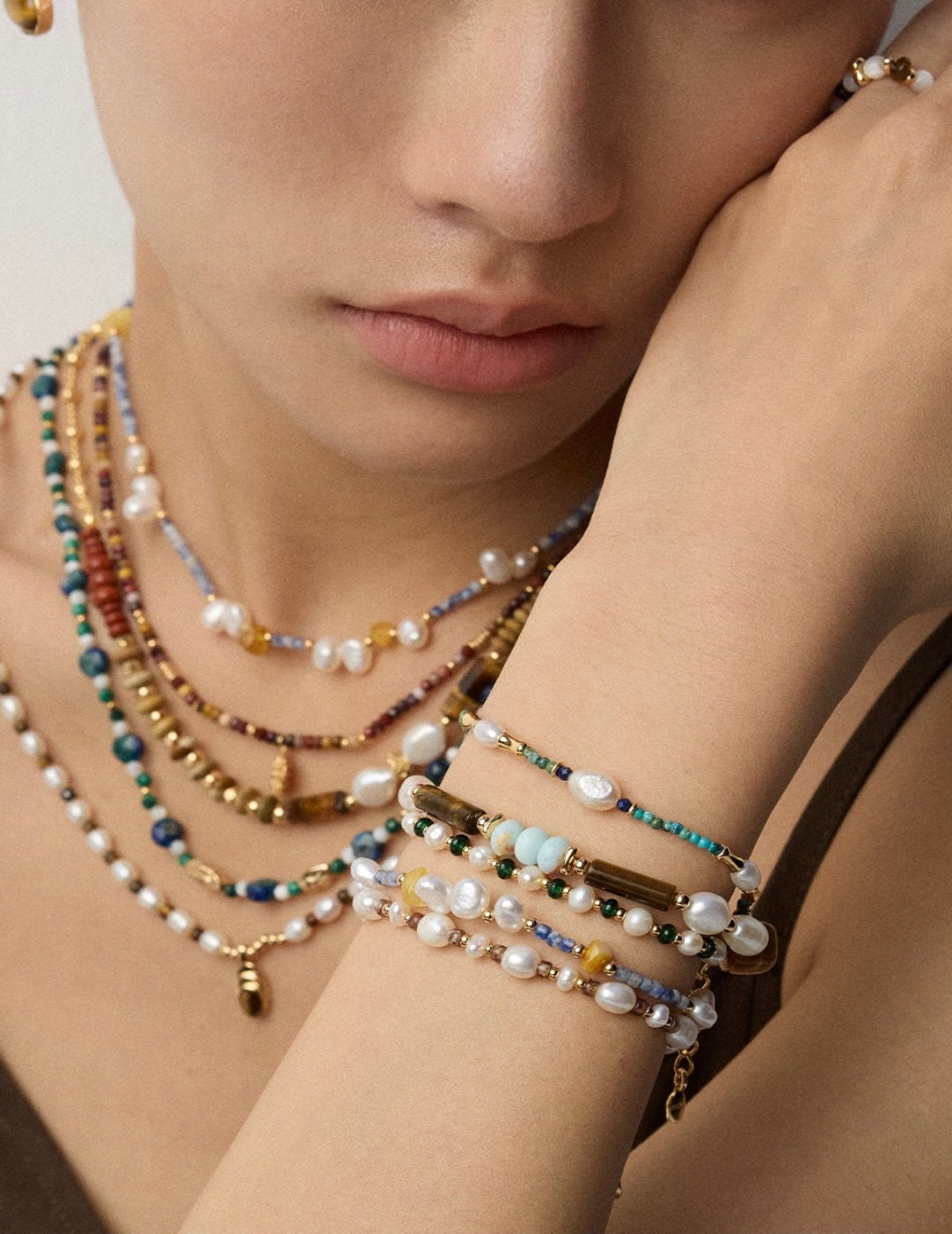
Article: Gold-Plated Sterling Silver vs Gold Vermeil: What’s the Difference?
Gold-Plated Sterling Silver vs Gold Vermeil: What’s the Difference?
Gold-plated sterling silver and gold vermeil can look very similar. Both combine the warm appearance of gold with a sterling silver base, but the terms do not necessarily describe the same gold-layer thickness or production standard.
Understanding the difference can help you compare jewelry more accurately, care for your pieces correctly and choose an option that suits your style and budget.
What Is Gold-Plated Sterling Silver?
Gold-plated sterling silver is made by applying a layer of gold over an S925 sterling silver base.
The S925 mark means that the underlying silver contains 92.5% pure silver, with the remaining portion usually consisting of other metals added for strength. Pure silver is naturally soft, so this alloy makes the jewelry more practical for regular wear.
Gold plating gives the piece a warm gold-tone appearance while retaining sterling silver beneath the surface. It offers an accessible way to enjoy both materials without the higher price of solid gold.
At Janique Jewelry, our gold-tone pieces are described as gold-plated S925 sterling silver where this material has been confirmed.
What Is Gold Vermeil?
Gold vermeil also uses sterling silver as its base metal. The main distinction is that vermeil is normally associated with specific requirements concerning the gold purity and thickness of the coating.
These requirements may vary between countries and markets. A product should therefore only be described as gold vermeil when its manufacturing specifications confirm that it meets the relevant standard.
An S925 stamp alone does not prove that a piece is vermeil. It identifies the sterling silver base, but it does not reveal the purity or thickness of the gold layer.
Gold-Plated Sterling Silver vs Gold Vermeil
Base Metal
Both options use sterling silver as their underlying metal.
This distinguishes them from gold-plated jewelry made over brass, copper, stainless steel or another base metal.
When buying jewelry, it is important to check both the base metal and the surface finish. The phrase “gold-plated” by itself does not automatically mean that the piece contains sterling silver.
Gold Layer
The gold coating is the main point of difference.
Gold vermeil is generally associated with a more substantial gold layer and defined manufacturing requirements. Gold-plated sterling silver has gold applied over an S925 silver base, but the thickness of that layer can vary between manufacturers.
For this reason, gold-plated S925 sterling silver should not automatically be marketed as vermeil unless the supplier provides the necessary specifications.
Price
Gold-plated sterling silver is generally more affordable than gold vermeil and solid gold.
It can be a suitable choice for customers who want a precious-metal base and an elegant gold-tone finish without making the larger investment associated with solid gold.
Gold vermeil often costs more because of its specified gold coating and sterling silver construction.
Appearance
Gold-plated sterling silver and gold vermeil can appear almost identical when new. It is usually not possible to identify the difference from colour or photographs alone.
The appearance also depends on the gold purity, surface finish and overall design. Some gold finishes look soft and subtle, while others have a warmer or richer yellow tone.
What Does S925 Mean?
S925 indicates that the base material is sterling silver containing 92.5% pure silver.
The stamp describes the silver beneath the surface. It does not tell you:
-
The purity of the gold coating
-
The thickness of the plating
-
The plating method used
-
Whether a protective coating has been applied
-
Whether the piece qualifies as gold vermeil
These details must come from the manufacturer or supplier.
Is Gold-Plated S925 Sterling Silver Solid Gold?
No. The centre of the piece is sterling silver, while gold is applied to its surface.
This construction provides the appearance of gold together with a genuine sterling silver base. It is different from solid gold jewelry, which contains gold throughout the entire piece.
Over time, the plated surface may gradually become lighter in areas exposed to friction, moisture, perspiration or cosmetics. This is a natural characteristic of plated jewelry.
Why Choose Gold-Plated Sterling Silver?
Gold-plated S925 sterling silver may be a good choice if you:
-
Prefer sterling silver as the base metal
-
Enjoy the warmth and versatility of gold-tone jewelry
-
Want an accessible alternative to solid gold
-
Like changing jewelry to complement different outfits
-
Want to combine gold tones with pearls or gemstones
-
Appreciate delicate pieces for everyday styling
Its versatility makes it easy to wear with neutral outfits, evening looks and other gold-tone accessories.
How to Care for Gold-Plated Sterling Silver
Good care can help preserve the appearance of the gold-plated surface.
Apply Cosmetics Before Jewelry
Put on perfume, lotion, sunscreen and hairspray before wearing your jewelry. Allow these products to dry before the piece touches your skin.
Avoid Water and Chemicals
Remove gold-plated jewelry before showering, swimming, exercising or cleaning. Moisture, chlorine, salt, perspiration and household chemicals may affect the finish.
Clean It Gently
After wearing the piece, wipe it gently with a clean, soft and dry cloth.
Avoid abrasive polishing cloths, toothpaste, silver dips and strong jewelry cleaners. Products intended for unplated silver may remove or damage the gold surface.
Store Pieces Separately
Keep each piece in a separate soft pouch or jewelry-box compartment. This helps reduce scratches, rubbing and tangling.
Consider Pearls and Gemstones
If the design includes pearls or natural gemstones, follow the care requirements of those materials as well. Avoid soaking the piece unless the manufacturer specifically recommends it.
What to Check Before Buying
Before buying gold-plated sterling silver jewelry, check the product description for:
-
Confirmation of the S925 sterling silver base
-
The stated gold purity, if available
-
The type of plating or surface finish
-
Pearl or gemstone details
-
Product dimensions and chain length
-
Recommended care instructions
Accurate material information helps you understand what you are purchasing and set realistic expectations for how the piece should be worn and maintained.
Which Option Should You Choose?
Choose gold-plated S925 sterling silver if you want a sterling silver base, an elegant gold-tone appearance and a more accessible price.
Gold vermeil may suit customers who specifically want a product manufactured according to recognised vermeil requirements and are comfortable with its higher price.
Neither option is automatically right for everyone. Your choice should reflect your budget, wearing habits, preferred design and expectations about long-term care.
Final Thoughts
Gold-plated S925 sterling silver and gold vermeil both combine gold with a sterling silver base. The main difference lies in the specifications of the gold coating.
At Janique Jewelry, we describe our relevant products as gold-plated S925 sterling silver rather than gold vermeil unless the vermeil specifications have been independently confirmed. This provides customers with a clearer and more accurate understanding of the materials used.
Explore the Janique Jewelry collection and discover gold-plated sterling silver pieces designed to bring warmth, colour and effortless elegance to your jewelry collection.

Written by Janique Jewelry